

Passive fire protection helps contain fire and smoke within a building so occupants can safely evacuate and emergency services can respond.
In simple terms, it focuses on:
Fire rated boards – used to construct fire-resisting walls, ceilings, shafts and service enclosures to maintain compartmentation.
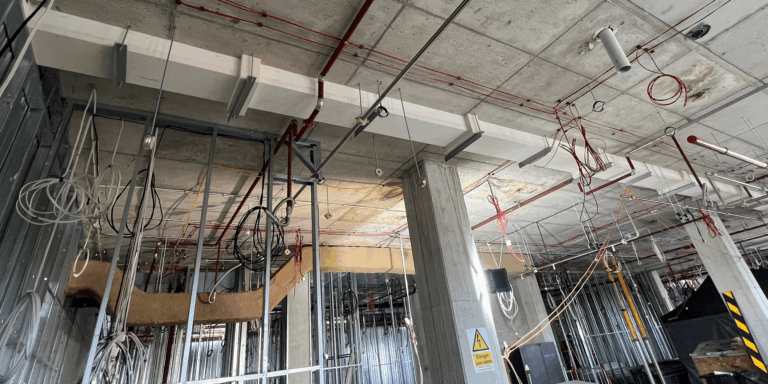
Fire stopping systems – sealants, collars and wraps designed to reinstate fire resistance where pipes, cables and ducts penetrate fire-rated elements.
Fire protection sprays and coatings – applied to structural steel and load-bearing elements to achieve required fire resistance levels.
Unlike active systems, passive fire protection relies on tested systems, correct detailing and compliant installation to perform as intended.
Based in WA, our team provides responsive local technical support and supply coordination for commercial, healthcare, education and industrial projects across Perth and regional Western Australia