


How Long Does Fibre Cement Board Last? Lifespan, Care And WA Conditions
Across older Perth suburbs such as Bassendean and Rockingham, fibro homes built in the 1950s and 1960s are still standing, with some original sheeting now in service for more than sixty years. Modern fibre cement products perform differently, and their service life depends on product type, installation and maintenance.
How long does fibre cement board last? Modern fibre cement cladding typically lasts 40 to 50 years, and quality panels such as Equitone, with an expected average reference service life of 50 years, can last longer with proper installation and maintenance. Conventional painted fibre cement boards require recoating every 10 to 15 years, while Equitone panels are through-coloured or factory-finished, are never painted on site and require significantly less maintenance.
Progressive Materials supplies Equitone fibre cement in WA as the state’s exclusive distributor. For architects, builders and building owners, understanding service life is essential to selecting the right product and managing whole of life costs. This article outlines expected lifespan by product type, the factors that shorten or extend it, and the maintenance required.

What Is Fibre Cement?
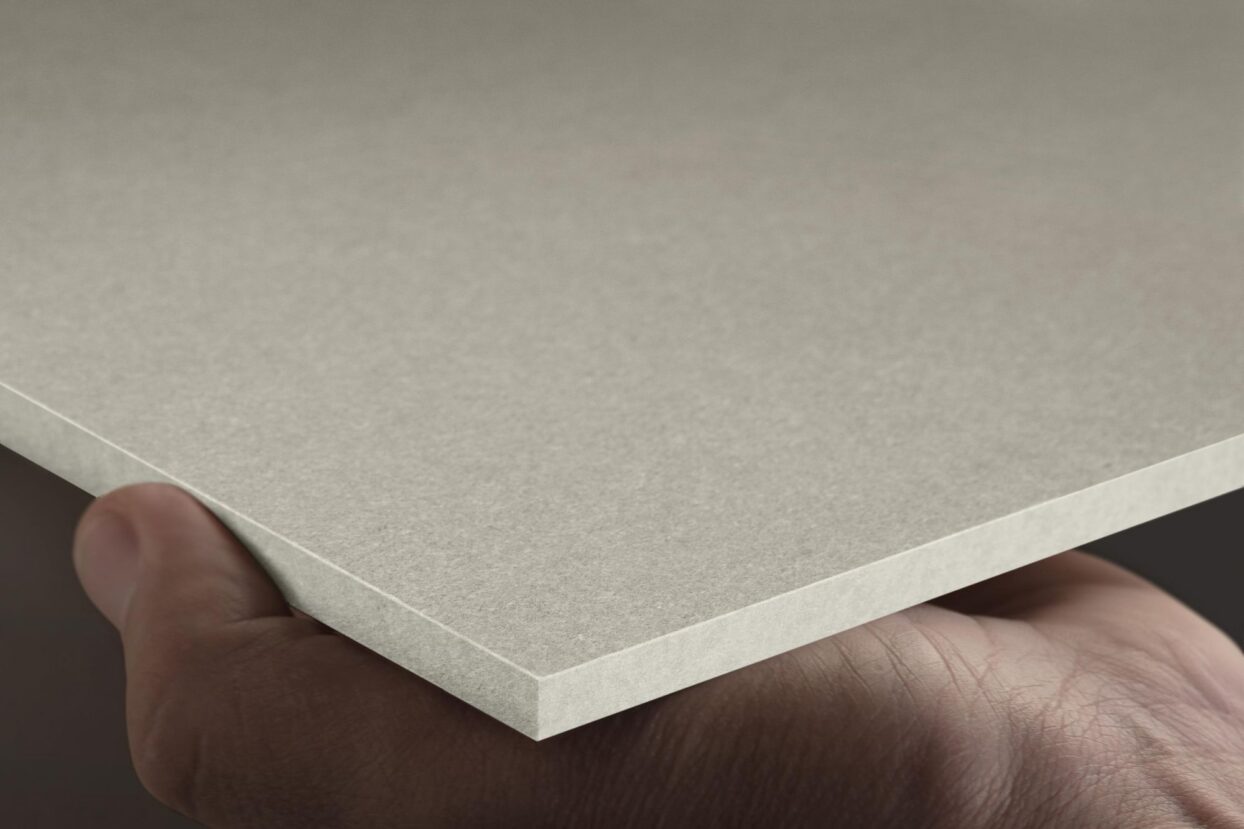
Fibre cement is a building material made from sand, Portland cement and cellulose fibres, pressed into sheets or planks and cured. The cement and sand give it strength and fire resistance, while the fibres hold it together and stop brittle cracking.
It is available in several forms: thin sheets for eaves and wet areas, weatherboard planks (also known as siding) and thicker, high-density panels suitable for commercial exterior cladding. Each form has a different expected service life.
A note for renovation projects: fibre cement made in Australia before the late 1980s often contained asbestos (banned nationally at the end of 2003), so existing fibro sheeting should be tested before it is cut, drilled or sanded.
How Long Each Type Lasts
Several factors determine where a product falls within the 40 to 50 year range, however the type of board establishes the baseline.
| Type | Typical lifespan | Maintenance requirements |
| Thin painted sheet (eaves, linings) | 30 to 40 years | Repaint every 10 to 15 years |
| Pre primed weatherboards | 40 to 50 years | Paint on install, repaint every 10 to 15 years |
| Through-coloured facade panels | 50 years or more | Wash down, inspect fixings |
Pre primed boards rely on their paint system for long term protection. Through-coloured panels such as Equitone tectiva carry the colour through the full thickness of the board, so scratches do not expose a different coloured core and there is no surface coating to fail.
Equitone’s Environmental Product Declaration (EPD) for tectiva, prepared to EN 15804 on a cradle-to-grave basis, sets a reference service life of 50 years. Over that period, when correctly installed, no maintenance, repair or replacement impacts are assigned to the use phase, as the panels do not change in composition. At the end of their life, Equitone panels are 100% recyclable, and all factory waste is currently recycled.

What Makes Fibre Cement So Durable?
Compared with natural materials, fibre cement has several benefits that explain its longevity, and Equitone’s high-density, through-coloured panels build on each of them.
• Resistant to rot. Unlike wood, Equitone fibre cement does not rot, warp or split when exposed to moisture, and it resists fungal decay.
• Termite proof. Equitone fibre cement is impervious to termites and has a high fire rating, an important consideration in WA.
• Non combustible. Equitone panels are deemed non-combustible under NCC 2022 and 2025 (Volume 1, clause C2D10(6)(d)), an advantage for bushfire prone sites.
• Stable in heat. Equitone fibre cement is dimensionally stable, has a very low thermal expansion rate and does not degrade under UV radiation, so Perth’s 40°C summer temperatures and intense sun do not degrade the panels.
• Coastal resistance. Equitone fibre cement does not rust or corrode in salt air, unlike steel cladding in coastal locations such as Cottesloe or Mandurah.
• High winds. Properly fixed Equitone fibre cement board is resistant to high winds and harsh weather conditions.
These are the reasons fibre cement outperforms timber and vinyl cladding over a building’s life. A more detailed comparison with brick, timber and metal is provided in our article on why fibre cement outlasts traditional materials.
What Shortens Fibre Cement’s Lifespan?
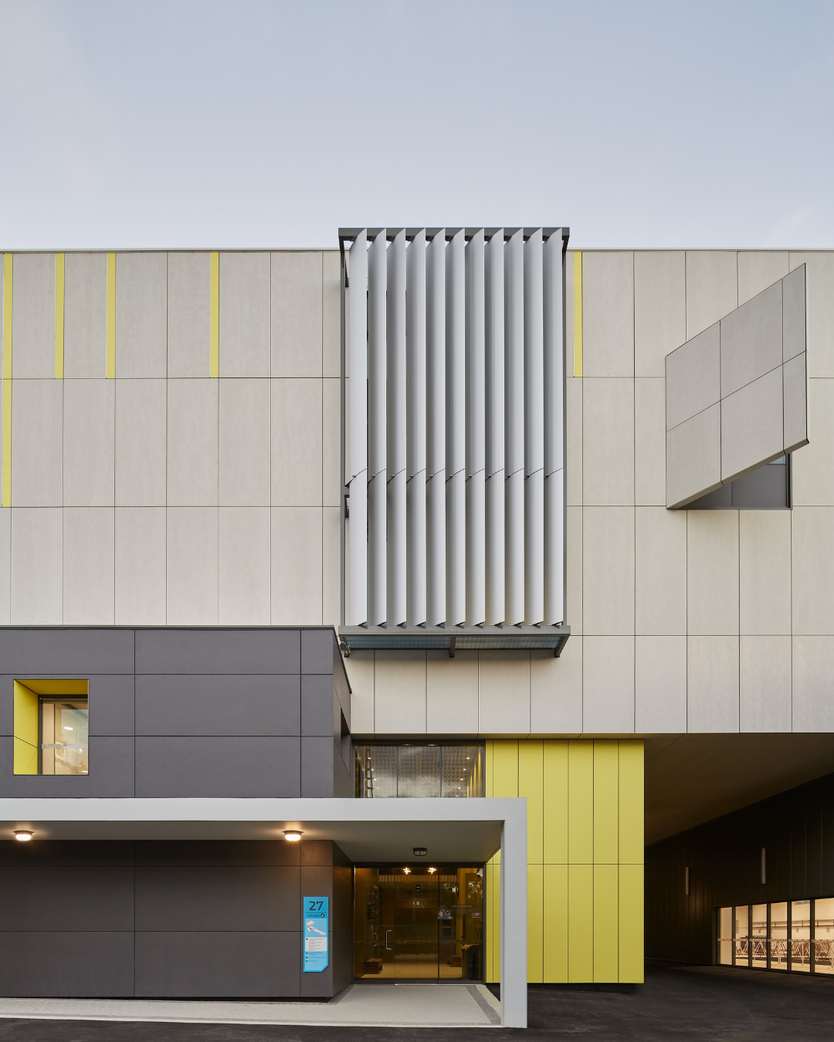
The board itself rarely fails, particularly high-density panels such as Equitone. Premature failure is almost always due to one of the following factors.
Poor Installation Quality
Installation quality is the most significant factor. Improper installation can lead to moisture infiltration through poorly flashed windows, missing expansion gaps or fixings placed too close to panel edges, which can cause cracking. Inadequate sealing at joints and penetrations is another common cause, as caulking and sealants deteriorate long before the board does.
This is one reason Equitone is installed as a ventilated rainscreen system. Panels are fixed to a subframe with an air cavity behind, allowing water to drain away and eliminating sealant joints that require maintenance. A high-performance wall underlay such as SOLITEX EXTASANA provides a second line of defence against moisture damage.
Skipped Maintenance
Fibre cement is low maintenance, not maintenance free. Conventional painted boards left beyond their recommended recoating interval begin to chalk and allow moisture to enter at the edges. Equitone panels do not rely on paint, but still require periodic wash down and clear cavity ventilation.
Exposure And Impacts
Extreme temperatures, repeated wetting and drying cycles and heavy impacts all affect long-term performance. Even dense panels like Equitone can chip or crack under heavy impact from trolleys or ladders, so lower panels in high traffic areas should be protected.
Simple Maintenance To Extend Lifespan
Equitone recommends periodic, preventive inspection and regular wash down to keep fibre cement cladding performing as expected. The following steps are based on Equitone’s cleaning and maintenance guidelines for Australia.
1. Wash down exterior surfaces regularly, ideally every 6 to 12 months, with clean water and a mild household detergent or soft soap, working from top to bottom, then rinse with clear water. Coastal sites and soffit-protected areas need more frequent wash down to remove salt, dirt and early mildew growth.
2. Inspect fasteners periodically as part of a preventive inspection, checking fixings, rivets and the subframe, and replace any loose or corroded ones.
3. Keep ventilation openings clear. The air inlets and outlets at the top and base of the cavity must remain unobstructed, as insufficient cavity ventilation is the main cause of mould, moss and algae. Rainscreen systems like Equitone use open or baffled joints, so there is no joint caulking or sealant to maintain, but flashings and penetrations should still be checked.
4. Avoid abrasives and solvents. Scouring pads, steel wool, ammonia-based cleaners and solvents such as acetone or white spirit can permanently damage the surface. Test any cleaning product on a hidden area first.
5. Use pressure washers with care. Equitone advises a pressure of 20 to 30 bar with the nozzle at least 60 cm from the facade on coated panels. Dirt blasters and rotating nozzles must not be used.
6. Treat stains and lime bloom correctly. Light efflorescence can be removed with a 5% malic acid or 10% citric acid solution, rinsed off within a few minutes. Cutting and drilling dust should be wiped off with a dry microfibre cloth, as a wet cloth may stain the panel. Where cleaning reduces the factory water-repellent impregnation on tectiva, reapply protective finishes using an Equitone-approved product to maintain integrity.
7. Maintain the building surrounds. Clean gutters and downpipes regularly to prevent blockages and overflow down the walls, and trim back vegetation touching the building to prevent damage and trapped moisture.
Equitone panels are not painted. Through-coloured panels like Equitone tectiva and factory-coated panels like Equitone pictura retain their finish without repainting, which is where most of the long term savings are achieved.

Working Safely With Fibre Cement
Durability comes with safety obligations during the installation process. Cutting fibre cement creates dust containing respirable crystalline silica, and dust exposure can cause silicosis and lung disease. Australia’s workplace exposure standard for respirable crystalline silica is 0.025 mg/m³ over an eight hour day.
To keep the dust generated to a minimum, cut with the manufacturer’s recommended saw blades and dust extraction (Equitone advises against angle grinders), cut outdoors or in a well-ventilated area, wear a correctly fitted P2 respirator as a minimum and never dry sweep. WorkSafe WA guidance applies to every site, and safe work practices are an essential part of a quality installation.
A Perth Example: Kwinana Energy Transformation Hub
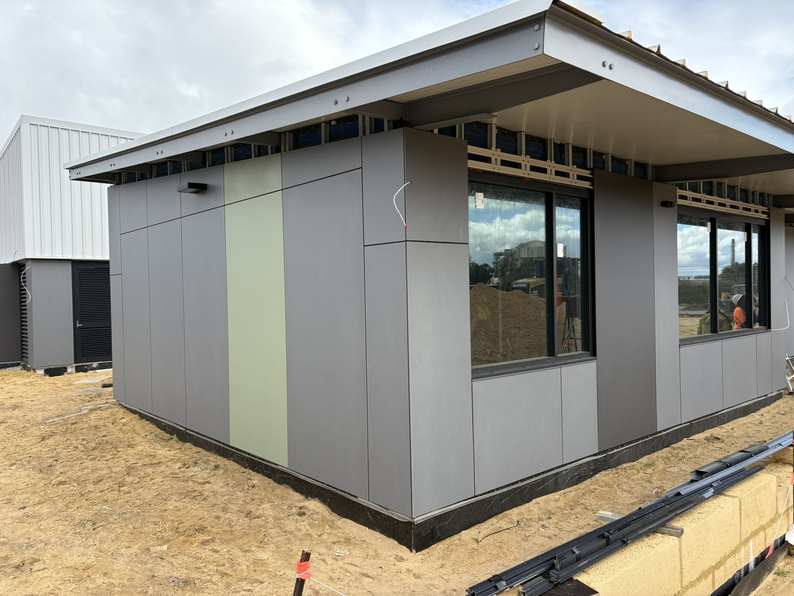
At the Kwinana Energy Transformation Hub, we specified and supplied Equitone natura facade panels in three tones (N252, N251 and N549) for a research facility in the Kwinana Strategic Industrial Area. The panels are fixed with DC Tech’s concealed fixing system, with SOLITEX EXTASANA underlay behind. The site is exposed to coastal sea breezes, high temperatures and industrial dust. Through-coloured, non combustible cladding is well suited to these conditions and is one of the most durable materials available for this environment.
Frequently Asked Questions
Below are common questions from builders, architects and building owners.
How Long Does Equitone Fibre Cement Last?
Equitone has a reference service life of 50 years under its Environmental Product Declaration, and with proper installation as a ventilated rainscreen and regular wash down, panels can last longer. Because Equitone is through-coloured or factory-finished, there is no paint to recoat, and no maintenance, repair or replacement is assumed over that 50-year period. As a high-quality board, Equitone lasts longer and requires less maintenance than painted fibre cement, needing only occasional washing to remove buildup.
Is Fibre Cement Waterproof?
Fibre cement board is moisture resistant, however the complete wall system keeps water out. Flashings, expansion gaps, underlay and a drained cavity all contribute.
Does Fibre Cement Need To Be Painted?
Standard and pre primed boards from other manufacturers must be painted. Equitone panels are through-coloured or factory-finished and should not be painted, which reduces whole of life cost.
What Warranty Comes With Fibre Cement?
Warranties vary by brand and product, with many manufacturers offering long warranties on the board. Confirm what the warranty covers, particularly the finish, and retain installation records.
Choosing Fibre Cement That Lasts
Perth’s older fibro homes show the material can perform for decades with basic care. Equitone takes that further, with a 50-year reference service life, a through-coloured or factory-finished surface that is never painted, and a ventilated rainscreen system that keeps moisture away from the building. With proper installation and the simple maintenance steps above, Equitone fibre cement is an ideal choice for a facade that combines long-term durability with real aesthetic appeal.
If you are specifying a facade in WA, our Wangara-based facade specialists can compare fibre cement facade panels, advise on fixing systems and supply Equitone from local stock. Read our Equitone specification guide, call 08 9445 8300 or send us your facade plans to discuss your project.

- How Long Does Fibre Cement Last? - 18 November 2026
- Valchromat in Joinery: Why Cabinet Makers Are Making the Switch - 30 June 2026
- Equitone Fibre Cement in WA: Local Supply, Technical Support and Specification Confidence - 7 May 2026


